
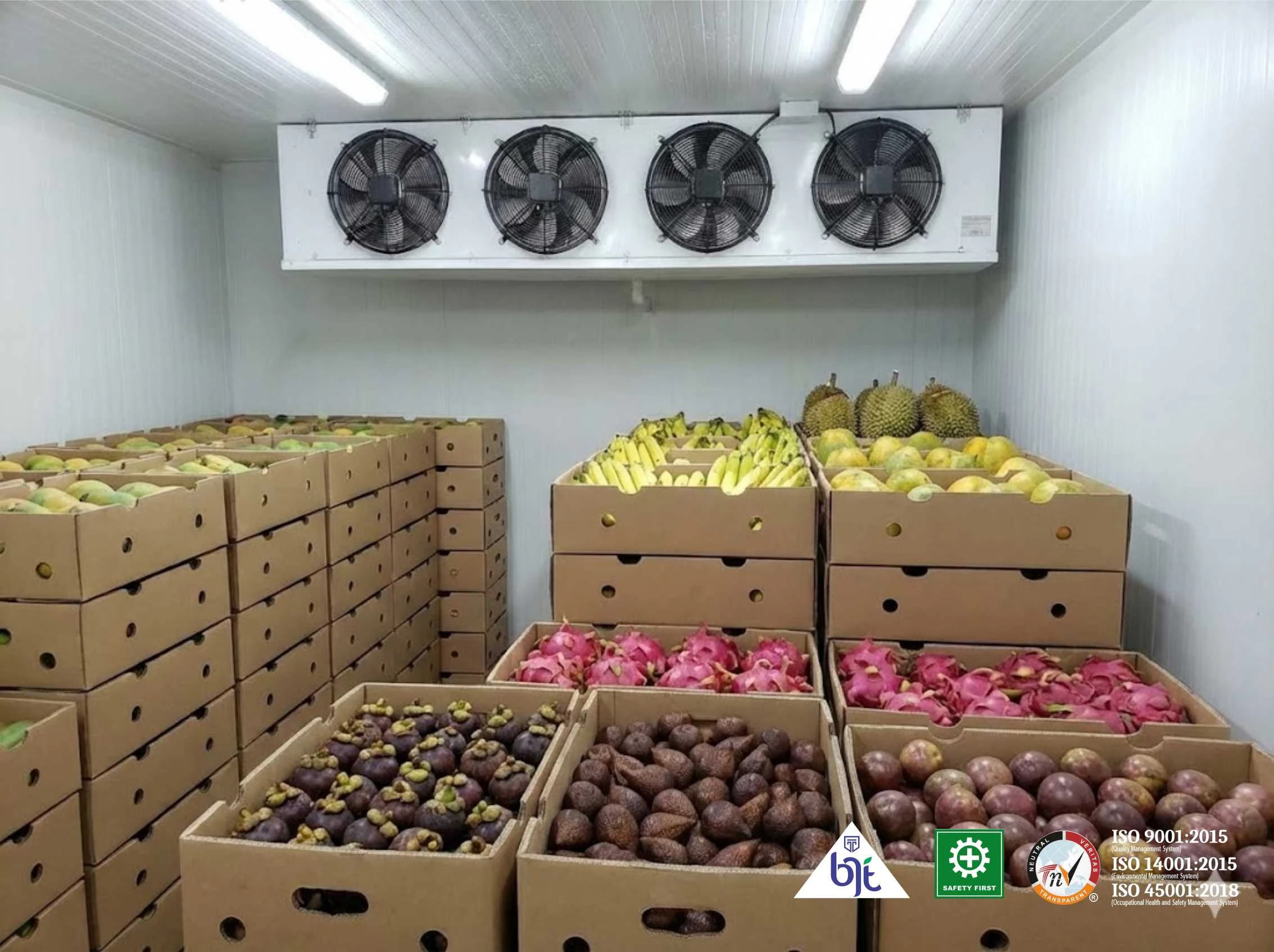
Guide to Fruits Cold Storage
1. Introduction
Fruits are among the most valuable agricultural products, cherished worldwide for their rich flavor, vibrant colors, and high nutritional value. They are an essential part of the human diet, providing vitamins, minerals, dietary fiber, and bioactive compounds that contribute to good health and disease prevention. However, fruits are also highly perishable commodities, largely due to their high moisture content and active metabolic processes that continue even after harvest. Once detached from the parent plant, fruits undergo a series of physiological and biochemical changes, such as respiration, moisture loss, enzymatic activity, and microbial growth. These processes gradually deteriorate their texture, taste, aroma, and nutritional quality, leading to a significant reduction in their market value and consumer appeal.
The perishability of fruits presents a major challenge in post-harvest management, particularly in regions where transportation, storage, and distribution infrastructure are inadequate. Without proper preservation techniques, substantial quantities of harvested fruits are lost before reaching consumers, resulting in economic losses for farmers and suppliers, as well as reduced food availability. In fact, post-harvest losses in the fruit sector can range from 20% to 50%, depending on the type of fruit, handling practices, and environmental conditions. This issue becomes even more pressing in tropical and subtropical regions, where high ambient temperatures and humidity accelerate spoilage.
One of the most effective and widely adopted strategies to combat this challenge is cold storage. Cold storage involves maintaining harvested fruits at low temperatures—typically just above their freezing point—to slow down physiological processes and microbial growth. By lowering the temperature, the rate of respiration and ethylene production in fruits is reduced, delaying ripening and senescence. This controlled environment helps retain moisture, preserve firmness, maintain flavor, and protect nutritional integrity for a longer period.
The benefits of cold storage extend beyond simple preservation. It allows fruits to be stored for extended periods without significant quality loss, enabling year-round availability of seasonal produce. This not only stabilizes market supply but also supports farmers and traders in securing better prices by reducing the need for immediate sales after harvest. Furthermore, cold storage facilitates the transportation of fruits over long distances, enabling access to domestic and international markets. In the global fruit trade, cold chain logistics—including refrigerated storage, transportation, and distribution—are critical to ensuring that consumers receive fresh, high-quality produce.
Different fruits have different optimal storage temperatures and humidity requirements, making it essential to apply tailored cold storage practices. For example, citrus fruits, apples, grapes, and berries each require specific conditions to maximize shelf life without causing chilling injuries or flavor loss. In many cases, cold storage is integrated with other preservation methods, such as controlled atmosphere storage, modified atmosphere packaging, or the use of natural coatings, to further enhance effectiveness.
In conclusion, cold storage plays a pivotal role in the post-harvest handling of fruits. By slowing down deterioration and extending shelf life, it safeguards quality, minimizes waste, and enhances profitability for producers and suppliers. As consumer demand for fresh produce grows and global trade expands, the importance of efficient and accessible cold storage systems will only continue to rise, making it a cornerstone of modern fruit preservation technology.
2. What is Cold Storage?
Cold storage refers to the carefully controlled storage of fresh produce at low but safe temperatures that significantly slow down natural biological processes, microbial growth, and enzymatic activity. By reducing the rate at which respiration and moisture loss occur, cold storage helps extend the shelf life of fruits, vegetables, and other perishable products. This process is widely used in the food supply chain, from post-harvest handling on farms to transportation, distribution, and retail display.
The primary goal of cold storage is to maintain the original quality, taste, texture, and nutritional value of produce for longer periods, allowing consumers to enjoy fresh, wholesome food even weeks or months after harvest. However, the temperature must be carefully monitored and adjusted according to the specific requirements of each product. If the temperature is too high, spoilage and deterioration will occur rapidly. On the other hand, if it is too low, chilling injury may develop, causing symptoms such as pitting, discoloration, or loss of flavor in sensitive produce like bananas, cucumbers, or tomatoes.
In addition to temperature, other factors such as humidity control and air circulation are also crucial in cold storage systems. Proper humidity prevents excessive dehydration, while good airflow ensures uniform cooling and reduces the risk of localized spoilage. Many modern cold storage facilities also incorporate technologies like controlled atmosphere (CA) storage, which regulates oxygen, carbon dioxide, and nitrogen levels to further delay ripening and decay.
By slowing down the natural aging and decay processes, cold storage plays a vital role in reducing food waste, stabilizing market supply, and ensuring year-round availability of seasonal produce. It is an essential link between agricultural production and consumer access, supporting both economic efficiency and food security.
3. Importance of Cold Storage for Fruits
-
Extends Shelf Life – Reduces spoilage and allows fruits to be stored for weeks or months.
-
Maintains Quality – Preserves flavor, texture, aroma, and nutritional value.
-
Market Flexibility – Allows producers to sell during periods of high demand and better prices.
-
Reduces Post-Harvest Losses – Minimizes wastage from decay and over-ripening.
-
Supports Export – Essential for transporting fruits to distant markets without deterioration.
4. Principles of Cold Storage
The effectiveness of cold storage depends on:
-
Temperature Control – Maintaining optimal low temperatures for each fruit type.
-
Humidity Control – Preventing excessive water loss while avoiding fungal growth.
-
Air Circulation – Ensuring even temperature distribution.
-
Modified/Controlled Atmosphere – Regulating oxygen (O₂) and carbon dioxide (CO₂) levels to slow respiration.
-
Hygiene & Sanitation – Preventing microbial contamination.
5. Optimal Storage Conditions for Common Fruits
Exactly — fruits vary widely in their optimal storage conditions because of their biology, maturity stage, and sensitivity to cold or dryness.
Here’s a quick breakdown:
1. Cold-sensitive fruits (avoid low temps to prevent chilling injury):
-
Bananas, mangoes, papayas, avocados, pineapples → Best stored at 12–15 °C (54–59 °F), moderate humidity (85–95%).
-
Chilling injury in these can cause browning, pitting, poor ripening, or flavor loss.
2. Cold-tolerant fruits (store in cooler temps to slow decay):
-
Apples, pears, grapes, kiwifruit → Best at 0–4 °C (32–39 °F), high humidity (90–95%).
-
Slows respiration and microbial growth.
3. Intermediate group:
-
Citrus fruits, pomegranates → Best at 5–9 °C (41–48 °F), moderate-to-high humidity.
Why humidity matters:
-
High humidity prevents shriveling (most fruits are ~85–95% water).
-
Too much humidity with poor airflow → mold growth.
-
Low humidity → skin wrinkling, texture loss.
If you want, I can give you a chart of common fruits with their exact storage temperature & humidity ranges so it’s easier to reference. That would make this much more practical.
| Fruit | Temp. (°C) | Relative Humidity (%) | Storage Life |
|---|---|---|---|
| Apple | 0 to 1 | 90–95 | 2–6 months |
| Banana | 13–15 | 90–95 | 2–3 weeks |
| Mango | 12–14 | 85–90 | 2–3 weeks |
| Orange | 3–5 | 85–90 | 1–2 months |
| Grapes | 0 | 90–95 | 2–3 months |
| Strawberry | 0 | 90–95 | 5–7 days |
| Pineapple | 7–10 | 85–90 | 2–4 weeks |
| Avocado | 4–7 | 85–90 | 2–4 weeks |
| Papaya | 7–10 | 85–90 | 1–3 weeks |
| Pear | 0 | 90–95 | 2–5 months |
6. Types of Cold Storage Systems
A. Conventional Cold Rooms
-
Operate at a fixed temperature and humidity.
-
Suitable for short-term storage.
B. Controlled Atmosphere (CA) Storage
-
Controls oxygen, carbon dioxide, and nitrogen levels.
-
Extends shelf life by slowing respiration.
-
Common for apples, pears, and kiwifruit.
C. Modified Atmosphere (MA) Storage
-
Uses packaging films to modify internal gas composition naturally.
-
Ideal for smaller-scale storage and transport.
D. Refrigerated Transport
-
Cold chain logistics for long-distance shipments.
-
Maintains constant temperature during transit.
7. Cold Storage Process for Fruits
-
Harvesting – Picking fruits at the right maturity stage.
-
Pre-Cooling – Rapid removal of field heat (hydro-cooling, forced-air cooling, vacuum cooling).
-
Sorting & Grading – Removing damaged or diseased fruits.
-
Packaging – Using ventilated crates or boxes for airflow.
-
Storage Loading – Placing fruits in cold rooms without blocking airflow.
-
Monitoring – Regular checks for temperature, humidity, and ethylene levels.
-
Dispatch – Following “First In, First Out” (FIFO) principles.
8. Factors Affecting Cold Storage Performance
-
Fruit Variety & Maturity – Immature or overripe fruits respond poorly to storage.
-
Pre-Cooling Efficiency – The faster field heat is removed, the longer the shelf life.
-
Sanitation – Poor hygiene can lead to mold and rot.
-
Temperature Fluctuations – Cause condensation, promoting fungal growth.
-
Ethylene Sensitivity – Ethylene gas accelerates ripening; sensitive fruits should be stored separately.
9. Challenges in Fruits Cold Storage
-
High Energy Costs – Refrigeration requires continuous power.
-
Infrastructure Investment – Initial setup is expensive.
-
Chilling Injury – Damage from storing fruits below safe temperatures.
-
Ethylene Damage – Mixed storage of ethylene-producing and ethylene-sensitive fruits.
-
Cold Chain Breaks – Loss of quality if temperature control fails during transport.
10. Best Practices for Effective Cold Storage
-
Maintain consistent temperature and humidity.
-
Use pre-cooling immediately after harvest.
-
Store compatible fruits together.
-
Ensure regular maintenance of refrigeration systems.
-
Train staff on cold chain management.
-
Use data loggers for continuous monitoring.
-
Follow FIFO to minimize over-storage.
11. Future Trends in Fruit Cold Storage
-
Smart Sensors & IoT – Real-time monitoring of temperature, humidity, and gas levels.
-
Renewable Energy Integration – Solar-powered cold storage to cut energy costs.
-
Advanced Packaging – Biodegradable, breathable films for modified atmosphere storage.
-
AI & Data Analytics – Predicting shelf life and optimizing storage parameters.
-
Mobile Cold Units – Flexible, portable storage for small farmers.
12. Conclusion
Cold storage is a critical component in today’s fruit supply chain, acting as a bridge between harvest and consumption. From the moment fruit leaves the orchard or farm, it begins a natural process of ripening and eventual deterioration. Without proper temperature and humidity control, this deterioration can accelerate, leading to significant losses before the produce even reaches consumers. Cold storage systems slow down these biological processes, preserving freshness, flavor, and nutritional value for extended periods.
In the past, cold storage was viewed primarily as a logistical necessity—a means to store products temporarily until they could be transported and sold. However, in the modern agricultural landscape, it has evolved into a strategic tool. Farmers, exporters, and distributors now recognize that the ability to maintain optimal storage conditions directly influences their competitiveness in local and international markets. For fruits such as apples, grapes, bananas, and berries, even slight deviations from ideal storage temperatures can result in reduced shelf life and lower quality, making precision control essential.
Advances in technology have transformed the way cold storage facilities operate. Modern systems often incorporate computer-controlled refrigeration units, real-time temperature and humidity monitoring, and even smart sensors that alert operators to any changes in conditions. Some facilities use controlled atmosphere (CA) storage, where oxygen, carbon dioxide, and nitrogen levels are carefully regulated to slow fruit respiration and delay ripening. Such innovations not only help preserve the fruit’s appearance and taste but also ensure it remains safe for consumption over extended periods.
The economic benefits of cold storage are substantial. By reducing post-harvest losses—which can range from 20% to 50% in developing regions—farmers and distributors can increase profitability. In addition, the ability to store fruit for longer periods allows producers to time their sales strategically, avoiding market gluts immediately after harvest and securing better prices. For exporters, cold storage is indispensable for reaching distant markets while maintaining compliance with stringent quality standards.
Sustainability is also becoming a defining factor in the future of cold storage. Energy-efficient refrigeration units, renewable power integration, and eco-friendly refrigerants are increasingly being adopted to reduce the environmental footprint of these facilities. Moreover, advances in insulation and thermal energy storage are helping to minimize energy use while maintaining consistent conditions. These improvements not only lower operational costs but also align with global efforts to make the food supply chain more environmentally responsible.
Affordability is another area of progress. Previously, large-scale cold storage infrastructure was accessible mainly to big agribusinesses. Today, modular and mobile cold storage units make it possible for smallholder farmers to benefit as well. Cooperative models, where multiple producers share the costs and use of a facility, are helping rural communities access this vital technology.
In essence, cold storage has moved far beyond being just a storage solution. It is now a powerful enabler of market expansion, quality assurance, and sustainable growth in the fruit industry. As technology continues to advance and accessibility improves, cold storage will remain a cornerstone of global fruit production, ensuring that consumers everywhere can enjoy fresh, high-quality produce year-round.