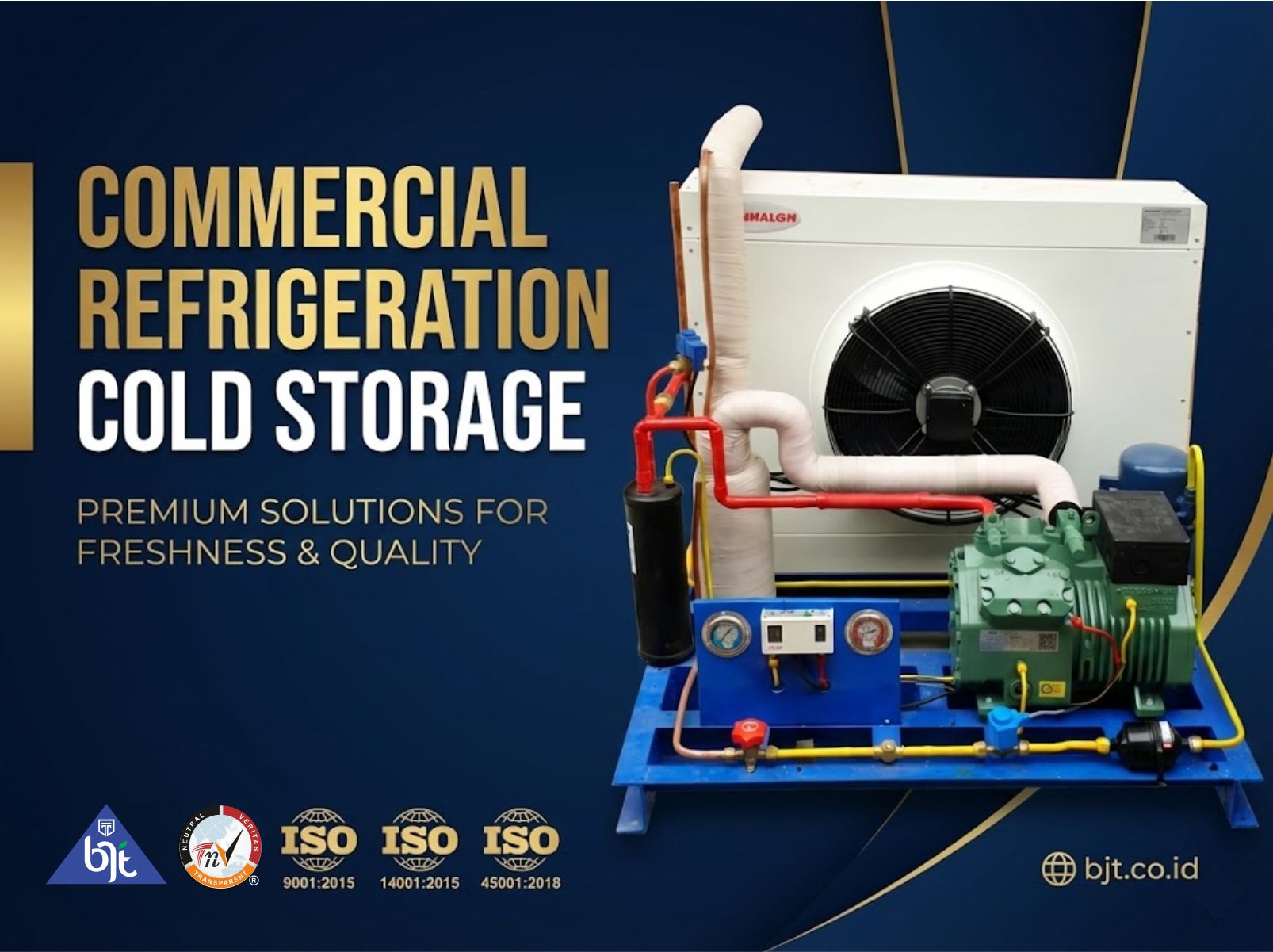

Custom Industrial Refrigeration: Revolutionizing Cold Storage BJT
In today’s fast-paced and quality-driven industries, maintaining precise temperature control is not just an operational necessity—it is a cornerstone of product quality and safety. As global markets continue to demand better efficiency and reliability in refrigeration systems, custom solutions for cold rooms, chillers, and freezers are emerging as critical investments. BJT Indonesia has positioned itself as a leading innovator in this arena by delivering tailor-made refrigeration solutions that meet the diverse and rigorous needs of industries ranging from food processing to pharmaceuticals and beyond.
This article provides an in-depth look at how BJT Indonesia customizes its cold storage systems, the technical innovations behind these systems, the advantages of a tailored approach, and the potential future developments that promise to reshape the industrial refrigeration landscape.

I. The Evolution of Cold Storage and Industrial Refrigeration
A. A Historical Perspective
Cold storage is not a modern invention. In fact, the basic principle of preserving food and other perishables through low-temperature storage dates back centuries. Early methods—using naturally cool caves, ice harvesting, or evaporative cooling—set the stage for the technological revolutions that would follow. However, the Industrial Revolution and subsequent technological advancements led to the creation of mechanical refrigeration systems. These innovations allowed for controlled, consistent temperatures, and paved the way for the complex, high-performance systems used today.
B. From Standardized Units to Customized Solutions
As industries diversified and their specific needs evolved, the limitations of standardized, off-the-shelf refrigeration units became apparent. One size no longer fits all—particularly when dealing with sensitive products that require ultra-precise conditions. This gap drove companies like BJT Indonesia to explore the potential of customization, delivering solutions designed not just to meet but to exceed specific operational requirements. Customization allows for the integration of unique design specifications, advanced control mechanisms, and energy-saving technologies that are tailored to the user’s environment and needs.
II. BJT Indonesia: Pioneers in Custom Refrigeration Systems
A. Company Background and Mission
BJT Indonesia has earned a reputation as a pioneer in the field of industrial refrigeration by combining local expertise with global technological standards. Their mission is to provide robust, energy-efficient, and highly customizable refrigeration systems that empower businesses to maintain quality and safety in their storage processes. With decades of experience, the company has steadily evolved from traditional refrigeration manufacturing to embracing modern, digitally enhanced production and monitoring methods.
B. Product Portfolio Overview
BJT Indonesia’s extensive range of products includes:
- Cold Rooms: Designed to maintain stable, controlled environments for perishable goods. These units can be customized in size, insulation type, and control systems.
- Chillers: Employed in both industrial and commercial settings to regulate temperatures through efficient cooling cycles. Chillers are key to managing processes that require precise temperature maintenance.
- Freezer Machines: Engineered to achieve and sustain ultra-low temperatures. These machines are critical in preserving sensitive biological samples, pharmaceuticals, and certain food products.
By focusing on customization, BJT Indonesia ensures that every system is optimized for the client’s unique operational conditions, thereby maximizing efficiency and reducing overall operating costs.
III. The Imperative of Customization in Industrial Refrigeration
A. Meeting Diverse Industrial Needs
Industries are not homogenous, and neither are their refrigeration requirements. Whether it’s a large-scale food processing plant, a pharmaceutical production facility, or a research laboratory, each sector presents unique challenges. Custom refrigeration systems offer:
- Adaptability: Systems can be designed to fit various spatial constraints and operational demands.
- Precision: Tailored control systems ensure that temperature, humidity, and airflow are optimized for the specific products being stored.
- Scalability: Custom solutions can evolve as the business grows, providing flexibility for future expansion.
B. Energy Efficiency and Cost Management
One of the most compelling benefits of a customized refrigeration system is its ability to maximize energy efficiency. Off-the-shelf models often come with energy consumption levels that do not match a facility’s specific load requirements. Custom solutions by BJT Indonesia allow:
- Optimal Component Selection: By choosing compressors, refrigerants, and control systems that are best suited to the operational profile, energy wastage is minimized.
- Advanced Control Mechanisms: Digital monitoring and automation can dynamically adjust cooling performance based on real-time demand, ensuring that energy usage remains efficient.
- Sustainable Operation: Incorporating eco-friendly refrigerants and innovative design techniques, these systems help reduce the carbon footprint of industrial operations.
C. Enhanced Safety and Compliance
Industries that handle sensitive products must adhere to strict safety and regulatory standards. Custom refrigeration systems can be designed with built-in safety features such as:
- Redundancy: Multiple backup systems ensure continuous operation even if one component fails.
- Regulatory Compliance: Systems are engineered to meet industry-specific standards, including FDA, GMP, or local regulatory requirements.
- Real-Time Monitoring: Integrated sensors and alarms provide early warnings of potential issues, allowing preventive measures before product quality is compromised.
IV. Engineering Behind Custom Cold Rooms, Chillers, and Freezers
A. Key Components and Technologies
The development of a custom refrigeration system involves a careful selection of various components and technologies. BJT Indonesia’s engineering approach includes:
1. Advanced Insulation and Structural Design
Custom systems are built with high-performance insulation materials that maintain internal temperatures and reduce thermal bridging. The structural design of cold rooms often incorporates modular panels that not only simplify installation but also provide enhanced durability against wear and tear.
2. State-of-the-Art Compressors and Refrigerants
Compressors are the heart of any refrigeration system. BJT Indonesia selects compressors that provide optimal performance for the specific cooling load. In tandem, eco-friendly refrigerants are chosen to meet global environmental standards while ensuring reliable performance even in extreme conditions.
3. Precision Temperature Controls
At the core of every custom refrigeration system is its control unit. These units feature advanced digital interfaces that allow for real-time adjustments. Integrated with sensors throughout the system, these controls ensure that every part of the storage environment is maintained at the desired temperature.
4. Automation and IoT Integration
The future of refrigeration is digital. BJT Indonesia incorporates IoT technology to enable remote monitoring and automated adjustments. This integration allows facility managers to track performance metrics, receive alerts, and adjust settings from anywhere, thereby reducing downtime and optimizing system performance.
B. Custom Engineering Process
The process of customizing a refrigeration system begins with a detailed consultation, where engineers assess the specific needs of the client. Key stages include:
- Requirement Analysis: Understanding the product types, storage volumes, ambient conditions, and regulatory requirements.
- Design Phase: Developing schematic designs and simulations to ensure that the proposed system will meet the required specifications.
- Component Selection: Identifying the best compressors, refrigerants, insulation materials, and control systems for the application.
- Installation and Testing: Building and installing the system on-site, followed by rigorous testing to ensure operational excellence.
- Ongoing Support and Maintenance: Providing training, support, and regular maintenance to ensure that the system continues to operate efficiently over time.
Each stage is carefully executed to ensure that the final system not only meets but exceeds the client’s expectations.
V. Applications of Custom Refrigeration Solutions
A. The Food Industry
The food industry remains one of the most critical sectors for refrigeration technology. With perishable products that require constant temperature monitoring, the need for reliable and efficient refrigeration is paramount. Custom cold rooms and freezer machines from BJT Indonesia ensure that:
- Freshness is Maintained: Precise temperature control helps preserve the taste, texture, and nutritional value of food products.
- Safety Standards are Met: Advanced monitoring systems minimize the risk of bacterial growth and spoilage.
- Efficiency is Maximized: Tailored designs reduce energy consumption and operational costs, making food production more sustainable.
B. Pharmaceuticals and Biotechnology
Pharmaceuticals and biotechnology companies require cold storage solutions that protect sensitive compounds, vaccines, and biological samples from degradation. The custom systems provided by BJT Indonesia offer:
- Ultra-Low Temperature Capabilities: Essential for storing vaccines and other temperature-sensitive medications.
- Regulatory Compliance: Ensuring that storage conditions meet stringent guidelines set by health authorities.
- Enhanced Security: Features like restricted access and comprehensive monitoring safeguard both the products and the facility.
C. Research Laboratories
In research environments, experiments often rely on precise temperature controls to ensure data integrity and reproducibility. Custom cold rooms and chillers allow laboratories to:
- Maintain Consistent Conditions: This is crucial for experiments involving cell cultures, chemical reactions, or materials testing.
- Adapt to Varied Requirements: Different research projects may require different temperature ranges; customized systems can be reconfigured accordingly.
- Integrate with Existing Technologies: Modern laboratories often have complex systems that require seamless integration with refrigeration systems, including data logging and remote monitoring.
D. Industrial and Manufacturing Applications
Beyond food and pharmaceuticals, many manufacturing processes depend on controlled cooling environments. Industries such as plastics, chemicals, and electronics manufacturing use custom chillers to:
- Regulate Production Processes: Many manufacturing processes require specific temperatures for optimal performance.
- Protect Sensitive Materials: Some components and materials degrade quickly if not stored under controlled conditions.
- Improve Efficiency: Energy-efficient chillers contribute to lower operational costs and improved overall productivity.
VI. Technological Innovations Driving Custom Refrigeration
A. Integration of Digital Technologies
One of the most transformative aspects of modern refrigeration is the integration of digital control systems. BJT Indonesia has embraced this shift by incorporating state-of-the-art automation and Internet of Things (IoT) features into their designs. Key innovations include:
- Remote Monitoring: Operators can track system performance, temperature trends, and energy usage in real time.
- Predictive Maintenance: Data analytics allow for the prediction of potential system failures, enabling timely maintenance and reducing unplanned downtime.
- Smart Adjustments: Automated systems can dynamically adjust cooling output based on real-time sensor data, ensuring that the refrigeration environment remains consistent despite external fluctuations.
B. Energy Efficiency and Environmental Considerations
With global energy demands on the rise and environmental regulations tightening, energy efficiency is no longer an optional upgrade—it is a necessity. Custom refrigeration systems by BJT Indonesia are engineered to minimize energy consumption by:
- Using High-Efficiency Compressors: Modern compressors operate with less energy while delivering the same cooling capacity.
- Optimizing Insulation: Advanced materials and design techniques help reduce energy losses, ensuring that the desired temperature is maintained with minimal effort.
- Implementing Eco-Friendly Refrigerants: New refrigerants have a lower global warming potential (GWP), aligning with international efforts to combat climate change.
- Automated Energy Management: Integrated control systems constantly optimize energy usage by matching cooling output with demand, resulting in significant operational savings.
C. Safety, Reliability, and Redundancy
Industrial refrigeration systems must operate continuously in harsh conditions. BJT Indonesia prioritizes safety and reliability through:
- Built-In Redundancy: Critical components have backup systems that kick in automatically if the primary system fails.
- Robust Design: Custom-built systems are designed to withstand environmental challenges such as temperature extremes, humidity, and mechanical wear.
- Real-Time Alert Systems: Sensors throughout the system monitor for anomalies and trigger alerts that allow for immediate corrective action, thus minimizing the risk of product loss or system failure.
VII. Overcoming Challenges in Custom Refrigeration
A. Design and Installation Complexity
Custom refrigeration systems are inherently complex due to the need to integrate various components that must work in harmony. The challenges include:
- Spatial Constraints: Designing a system that fits within a pre-existing building layout while maximizing cooling efficiency.
- Integration with Existing Infrastructure: Ensuring that the new system works seamlessly with other facility systems such as power supply, building management, and production lines.
- Customization Versus Standardization: Balancing the benefits of a tailor-made solution with the cost-effectiveness and reliability of proven, standard components.
BJT Indonesia addresses these challenges through a rigorous design process, involving detailed site surveys, simulation modeling, and iterative design adjustments to ensure that every system is robust, reliable, and efficient.
B. Regulatory and Safety Standards
Different industries are subject to varying regulatory requirements. Meeting these standards requires:
- Comprehensive Documentation: Detailed design documents, testing protocols, and operational manuals are necessary to demonstrate compliance.
- Certification and Quality Assurance: Systems must be tested against industry standards and often require third-party certification.
- Ongoing Audits and Maintenance: Regular inspections and preventive maintenance are critical to ensure that the system continues to meet safety and operational standards over its lifecycle.
BJT Indonesia’s deep understanding of both local and international standards allows them to design systems that not only perform exceptionally but also adhere to all necessary safety and regulatory requirements.
VIII. Case Studies: Success Stories in Customized Refrigeration
A. A Food Processing Facility Transformation
One notable success involved a large-scale food processing facility that required a new cold storage system capable of handling significant temperature fluctuations while maintaining high energy efficiency. BJT Indonesia’s engineers conducted a thorough site evaluation, designed a modular cold room system with advanced temperature control, and integrated energy-saving measures. The result was a system that:
- Reduced energy consumption by over 20%.
- Increased product shelf life and quality.
- Enhanced operational safety with real-time monitoring and automated alerts.
B. Pharmaceutical Cold Storage System
In another instance, a pharmaceutical company needed an ultra-low temperature freezer system for vaccine storage. The project involved creating a system that could achieve and maintain temperatures as low as –70°C, with minimal fluctuation and high reliability. BJT Indonesia’s custom design included:
- A state-of-the-art compressor optimized for ultra-low temperatures.
- Multiple redundant systems to ensure continuous operation.
- Comprehensive monitoring and alert systems that provided both local and remote oversight. This solution not only met the strict regulatory standards but also provided the pharmaceutical company with the confidence that their critical products were stored under optimal conditions.
C. Research Laboratory Innovation
A research laboratory, engaged in sensitive biomedical experiments, required a cold storage solution that could maintain a consistent environment to preserve experimental integrity. The custom solution provided by BJT Indonesia was integrated with IoT technology that allowed researchers to remotely monitor and adjust conditions in real time. This system contributed to:
- Improved reliability of experimental results.
- Enhanced flexibility to accommodate varying research requirements.
- A significant reduction in energy waste, aligning with the laboratory’s sustainability goals.
IX. Future Trends in Industrial Refrigeration
A. Advancements in IoT and Smart Systems
The future of industrial refrigeration is increasingly digital. Continued integration of IoT devices will enable even more precise control over temperature, humidity, and energy usage. With advancements in artificial intelligence (AI) and machine learning, future systems will likely:
- Predict maintenance needs before failures occur.
- Automatically adapt to changes in production schedules or external conditions.
- Provide deeper insights through data analytics, leading to further improvements in efficiency and performance.
B. Sustainability and Green Technologies
As environmental concerns grow, the refrigeration industry is at the forefront of sustainability efforts. Future trends include:
- The development of refrigerants with even lower environmental impact.
- Enhanced energy recovery systems that recycle waste heat.
- Increased use of renewable energy sources, such as solar or wind power, to supplement system operations. BJT Indonesia is actively exploring these avenues to ensure that its custom refrigeration solutions remain at the cutting edge of both performance and environmental stewardship.
C. Modular and Scalable Designs
The next generation of refrigeration systems will likely feature even greater modularity. This approach allows for:
- Easy expansion as businesses grow.
- Rapid reconfiguration for new applications.
- Improved repairability, as individual modules can be replaced or upgraded without overhauling the entire system. This trend will help businesses maintain operational continuity while adapting to evolving market conditions and technological advancements.
X. Conclusion: A Future Driven by Innovation and Customization
In an era where precision, efficiency, and sustainability are more important than ever, the role of custom refrigeration systems cannot be overstated. BJT Indonesia’s commitment to designing and manufacturing tailor-made cold rooms, chillers, and freezer machines is a testament to the power of innovation in meeting industry-specific challenges. By combining state-of-the-art technology with deep industry expertise, BJT Indonesia is not only setting new standards in industrial refrigeration but also paving the way for a future where customization leads to better outcomes in product quality, energy management, and operational safety.
The journey from historical cold storage methods to today’s advanced, digitally enhanced systems highlights the importance of adapting to the unique demands of each industry. With applications spanning food processing, pharmaceuticals, research laboratories, and industrial manufacturing, customized refrigeration systems provide a competitive edge—one that is defined by reliability, energy efficiency, and the ability to meet stringent regulatory standards.
As the global market continues to evolve, the trend towards customization will only accelerate, driven by the need for systems that can adapt to rapidly changing environments and technological advancements. The integration of IoT, AI, and sustainable practices will further enhance the capabilities of these systems, ensuring that they not only meet today’s challenges but also tomorrow’s demands.
For businesses looking to invest in refrigeration solutions that are both robust and flexible, BJT Indonesia offers a compelling proposition. Their expertise in custom design and engineering ensures that every system is perfectly matched to the client’s requirements—delivering superior performance, reduced operating costs, and long-term reliability.
In summary, the future of industrial refrigeration is bright, with companies like BJT Indonesia leading the charge. By focusing on innovation and customization, they are not just creating cold storage systems—they are revolutionizing the way industries manage temperature control, safeguard quality, and achieve operational excellence.
This article has explored the transformative impact of custom refrigeration solutions, the technological innovations driving the industry, and the significant role played by BJT Indonesia in setting new benchmarks for performance and sustainability in cold storage. As industries continue to grow and diversify, the need for tailored solutions will become even more critical—a trend that BJT Indonesia is well prepared to meet with cutting-edge technology and an unwavering commitment to quality.
By embracing customization, integrating digital advancements, and prioritizing energy efficiency and safety, BJT Indonesia is leading a new era in industrial refrigeration. Their approach not only enhances operational efficiency and product quality but also sets a precedent for sustainable and future-ready solutions that will benefit a wide range of industries for years to come.